
Introduction
If you’ve ever stared at your yard and thought, “I want this to feel alive… but I don’t know where to start,” you’re not alone. The truth is, most gardens don’t fail because people are lazy—gardens fail because the plan is fuzzy.
This garden guide homenumental is built for real life: small spaces, busy weeks, inconsistent weather, and the occasional “oops, I forgot to water.” You’ll learn how to build a garden that looks good, grows well, and doesn’t demand perfection to survive.
Here’s why this matters: healthy gardens aren’t just pretty. They can reduce stress, pull you outside for a few minutes of quiet, and even save money if you grow herbs or vegetables. Gardening also surged in popularity in recent years—an AP report cited about 80% of U.S. households participating in gardening in 2022, with average spending around $616 per household.
And one more perspective that changes everything: soil is precious. It can take over 1,000 years to form 1 cm of soil, which is why how you treat your soil today really does matter.
Garden guide homenumental: the mindset that makes gardens stick
Let’s start with the honest part: the best garden plan is the one you’ll actually follow when it’s hot, you’re tired, and the hose is tangled.
So here’s the mindset shift:
- Build habits, not a fantasy. A simple weekly routine beats an overcomplicated design you abandon in a month.
- Start smaller than your ego wants. A 4×8 bed you maintain feels better than a 20-foot plot you resent.
- Design for “future you.” Paths you can walk on, water access that’s easy, and plant choices you won’t babysit.
Definition (Garden mindset): A practical approach that prioritizes consistency, low-friction maintenance, and plants suited to your conditions—not someone else’s highlight reel.
A lot of people call this “common sense,” but it’s really just kindness toward your schedule.
Choose your purpose and map your space
Before you buy anything, answer one question:
What do you want this garden to do for you?
Pick one main goal (you can add later)
- Food garden: herbs, tomatoes, chilies, greens
- Flower garden: color, fragrance, bouquets
- Low-maintenance green space: perennials, shrubs, groundcovers
- Wildlife-friendly garden: pollinators, birds, beneficial insects
- A “sit-and-breathe” garden: shade, textures, calming layout
Do a quick 15-minute site check
Walk outside with your phone and notes. You’re looking for:
- Sunlight: full sun, partial shade, full shade
- Wind: strong gusts or sheltered corners
- Drainage: puddles that linger after rain
- Access: where will you water from? where will you carry soil/compost?
Real-life example: If your yard gets harsh afternoon sun, a “tough love” plant list (rosemary, lavender, okra, marigolds, many native species) will outperform delicate options that fry at 2 pm.
Simple sunlight guide
| Sun pattern | What it means | Plants that usually love it |
|---|---|---|
| Full sun | 6–8+ hours/day | tomatoes, peppers, herbs, zinnias |
| Part sun/shade | 3–6 hours/day | lettuce, spinach, mint (contained), begonias |
| Full shade | <3 hours/day | ferns, shade groundcovers, some ornamentals |

Soil first: testing, structure, and simple fixes
If you take only one thing from this article, take this: plants don’t grow in dirt—they grow in soil systems.
What “good soil” actually means
Good soil has three things working together:
- Structure (air pockets + water holding)
- Organic matter (compost, decomposed leaves)
- Balanced pH and nutrients (so plants can absorb food)
Test your soil pH (don’t guess)
A basic soil test is worth it. Many vegetables prefer slightly acidic soil. Mississippi State University Extension notes the ideal pH for vegetable garden soils is 6.0 to 6.5.
Definition (Soil pH): A measure of how acidic or alkaline your soil is. pH affects nutrient availability—meaning you can have fertilizer in the soil, but plants still can’t “access” it if pH is off.
Colorado State University Extension mentions many garden plants are often listed with a preferred range around pH 6.0 to 7.2, though tolerance varies.
Quick soil “feel test”
Grab a handful of moist soil and squeeze:
- Forms a tight, sticky ball: likely clay-heavy (drains slowly)
- Falls apart immediately: likely sandy (drains too fast)
- Holds shape but crumbles easily: nice loam-like balance (garden gold)
Easy fixes by soil type
If your soil is clay-heavy:
- Add compost regularly (top-dress, don’t fight it)
- Use mulch to protect structure
- Consider raised beds for vegetables
If your soil is sandy:
- Add compost + organic matter to hold moisture
- Mulch is non-negotiable
If your soil is compacted:
- Avoid working it when wet
- Use broadforking or gentle aeration
- Start with raised beds if you want immediate wins
Plant selection that actually survives
This is where most beginner gardens get emotionally hurt: buying plants that don’t match the climate, sunlight, or time you have.
Use your climate clues (hardiness zones)
If you’re choosing perennials, hardiness zones help you understand cold tolerance. The USDA Plant Hardiness Zone Map is based on average annual extreme minimum winter temperature, shown in 10°F zones and 5°F half zones.
Definition (Hardiness zone): A guide to which perennials are most likely to survive winter temperatures where you live.
Choose plants using the “3 filters”
Run every plant through these filters:
- Sun match: Does it fit your sunlight hours?
- Water reality: Are you likely to water 2–3x/week in summer?
- Maintenance level: Will you prune, stake, fertilize, and inspect weekly?
Beginner-friendly plant picks (often forgiving)
Vegetables/herbs (sunny spots):
- basil, mint (container), rosemary
- cherry tomatoes (staked), peppers
- okra (heat-tough), green beans
Flowers (easy joy):
- marigolds, zinnias, cosmos
- sunflowers (space allowing)
Low-maintenance structure:
- native shrubs or perennials suited to your region (ask a local nursery for true natives)
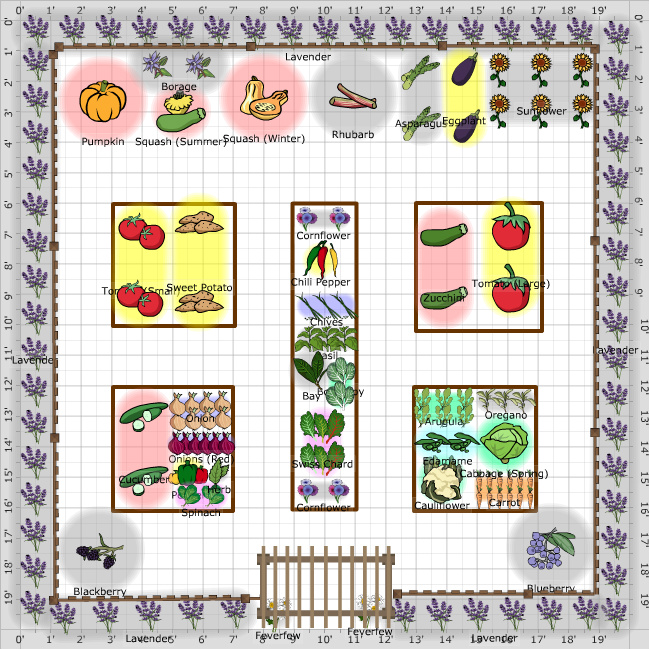
The “one bed” starter layout (small but impressive)
If you’re starting with a single 4×8 bed:
- Back row: 2 tomato plants (with support)
- Middle: basil + marigolds
- Front: lettuce/greens (if climate allows) or peppers
This looks full, smells amazing, and gives you a clear routine.
Watering without guesswork
Watering is where good gardens turn into crispy regrets—usually because people water randomly, not deeply.
The famous “1 inch per week” rule (and what it means)
Michigan State University Extension explains a practical benchmark: about 1 inch of water per week, and 1 inch over 1 square foot equals 0.623 gallons.
Illinois Extension similarly notes, as a general rule, many vegetable crops need at least 1 inch of water per week (more during heat or wind).
Water math table (so you stop guessing)
| Garden size | Weekly water (1 inch) | Approx gallons/week |
|---|---|---|
| 25 sq ft | 1 inch | 15.6 gal |
| 50 sq ft | 1 inch | 31.2 gal |
| 100 sq ft | 1 inch | 62.3 gal |
(Uses 0.623 gallons per sq ft per inch.)
How to water like a calm person
- Water early if possible (less evaporation, fewer disease issues)
- Water deeply, less often rather than shallow daily sprinkles
- Check soil moisture: if the top 2–3 inches are dry, it’s time
Simple moisture test: Stick your finger in the soil up to your second knuckle. If it’s dry, water. If it’s damp, wait.
Drip vs hose vs watering can
- Drip/soaker hose: best for consistent moisture, fewer leaf diseases
- Hose: fine if you water the soil, not the leaves
- Watering can: great for containers and small beds
This is one area where the garden guide homenumental approach is blunt: make watering easy or it won’t happen.
Compost, mulch, and feeding your garden long-term
This is where gardens go from “seasonal project” to “living system.”
Compost basics (without turning your life into a science experiment)
The U.S. EPA recommends maintaining a balance of materials—two to three parts carbon-rich “browns” to one part nitrogen-rich “greens” by volume.
And when people talk about compost “chemistry,” you’ll hear the C:N ratio. University of Florida IFAS notes the optimum C/N ratio for rapid composting is about 30:1 or less.
Definition (Compost): Decomposed organic matter that improves soil structure, feeds microbes, and helps soil hold water.
A simple compost “recipe”
Browns (carbon):
- dry leaves, shredded cardboard, straw
Greens (nitrogen):
- vegetable scraps, fresh grass clippings, coffee grounds
Rule of thumb: Browns should visually dominate. If it smells bad, you likely need more browns and airflow.
Mulch: the quiet hero
Mulch does three big things:
- slows evaporation (less watering stress)
- suppresses weeds
- protects soil structure
Use straw, shredded leaves, bark, or compost as a top layer depending on your garden type.
Feeding plants (keep it boring and consistent)
Instead of chasing fancy products:
- top-dress compost 2–3 times a year
- use balanced fertilizer only if needed (based on plant performance or soil test)
- avoid overfeeding leafy growth at the expense of fruiting
Pest and disease control with less panic
Every garden gets pests. The goal isn’t “perfect.” The goal is “manageable.”
A calmer approach: Integrated Pest Management (IPM)
Definition (IPM): A method that combines prevention, monitoring, and the least-toxic solutions first.
Prevention that actually works
- healthy soil + mulch (stronger plants resist stress)
- spacing for airflow (less fungus)
- water at soil level (less leaf disease)
- rotate crops if you grow vegetables yearly
Quick diagnosis table
| Symptom | Common cause | What to do first |
|---|---|---|
| Yellowing leaves | overwatering, nutrient lockout | check moisture + soil pH |
| Holes in leaves | caterpillars, beetles | inspect underside, hand-pick |
| White powder | powdery mildew | improve airflow, avoid overhead watering |
| Wilting in heat | normal midday stress or dry soil | check soil depth moisture |
Design touches that make it feel “monumental”
A garden can be productive and still feel like a place you want to be.
Use “focal points” (even in tiny spaces)
Examples:
- a single large pot with a statement plant
- a simple bench or chair
- a small trellis with flowering vines
- solar string lights along a path
Make paths practical (and your garden will feel bigger)
Even if you have one bed, define where you walk:
- stepping stones
- gravel strip
- mulch path
The 60-second “beauty upgrade”
Pick one of these:
- add two matching planters at the entrance
- add a short border edge
- add one vertical element (trellis, arch, tall pot)
Seasonal maintenance calendar
This is the routine that saves you from chaos.
Spring (setup + momentum)
- clean beds, add compost
- check irrigation/hoses
- plant cool-season crops (region-dependent)
- mulch once soil warms
Summer (consistency + protection)
- water deeply (adjust for heat/wind)
- check pests weekly
- harvest often (it encourages more production)
- add mulch if soil is exposed
Fall (reset + soil building)
- remove tired plants
- add compost and leaves as mulch
- plant garlic or cool-season greens if your climate allows
- plan what you’ll rotate next year
Winter (planning without pressure)
- clean tools
- sketch next year’s layout
- order seeds early if that’s your style
- focus on soil protection (mulch/cover)
“One-page” weekly checklist (printable idea)
- 10 minutes: walk and observe
- 10 minutes: water check + adjust
- 10 minutes: quick weeding
- 10 minutes: harvest + tidy
That’s it. That’s a garden life that doesn’t burn you out.
Homenumental background and financial insights
Because this keyword includes “Homenumental,” it’s fair to clarify what that refers to.
Personal background (brand background)
Homenumental presents itself as a home-and-lifestyle content site focused on helping readers make their homes “beautiful and functional,” and it also mentions offering guest posting opportunities for writers and experts.
Career journey (how platforms like this typically grow)
Most home-and-garden content brands grow through:
- publishing helpful how-to guides (search traffic)
- building repeat readers via newsletters/social
- collaborating with guest contributors and specialists
- creating content clusters (home, garden, renovations, décor)
Achievements (what “success” looks like here)
Without making assumptions about private analytics, common achievement signals for a content brand include:
- consistent publishing cadence
- strong topical coverage (home + garden clusters)
- improving search visibility and reader engagement over time
Estimated net worth / financial insights
There isn’t reliable public information that verifies a specific net worth for Homenumental as a brand. Rather than guessing, here are the common revenue levers for home-and-garden sites:
- Display ads (earnings tied to traffic + ad rates)
- Affiliate content (tools, planters, soil products, etc.)
- Sponsored posts (brand partnerships)
- Lead gen / services (consults, digital products)
If you’re building a similar site, your “net worth” is usually better measured as:
- traffic stability (organic + returning users)
- content library quality
- email list size
- revenue per 1,000 visits (RPM) across seasons
FAQ
What is “garden guide homenumental” supposed to mean?
It’s commonly used as a phrase tied to the Homenumental-style approach: practical planning, simple routines, and design choices that make a garden feel intentional and welcoming.
How big should my first garden be?
Start with one manageable area (like a 4×8 bed or a few containers). The best size is the one you’ll maintain weekly.
How often should I water a beginner garden?
A common baseline is about 1 inch per week, adjusted for heat, wind, and soil type.
What soil pH is best for vegetables?
Many vegetables do well around pH 6.0 to 6.5. A soil test helps you avoid wasted fertilizer and weak growth.
Is compost better than fertilizer?
Compost improves the whole soil system (structure + microbes + moisture holding). Fertilizer is more like a targeted “meal.” Many gardens benefit from both, used thoughtfully.
What are the easiest plants for beginners?
Herbs like basil and rosemary, flowers like marigolds and zinnias, and simple vegetables like peppers or beans—chosen based on your sunlight and climate.
How do I choose perennials that survive winter?
Use the USDA Plant Hardiness Zone Map to match perennials to your local minimum winter temperatures.
Why does my garden look messy even when plants are healthy?
It usually needs structure: defined edges, a path, mulch coverage, or a focal point (pot/bench/trellis). Small design choices make a big difference.
Conclusion
A garden doesn’t have to be expensive, perfect, or huge to feel incredible. It just needs a clear purpose, healthier soil, plants that match your reality, and a routine you can repeat without resentment.
If you follow this garden guide homenumental approach—small steps, smart watering, compost + mulch, and a little design intention—your yard starts to change in a way that feels almost personal. And once you see that first real burst of growth, you’ll understand why so many people get hooked.





![lwmfcrafts 7 Creative Ideas & Practical Guide [2026]](https://robertmygardenandpatio.net/wp-content/uploads/2026/01/lwmfcrafts-7-Creative-Ideas-Practical-Guide-2026-300x169.jpg)